Can I Eat Papaya when Pregnant?
At a Glance
⚠️ Concern: Unripe/green papaya contains latex (papain) that may stimulate uterine contractions; foodborne illness risk from pre-cut fruit or poor handling.
🔥 Risk Level: Moderate — Ripe papaya (yellow/orange flesh) is generally safe in normal food amounts; avoid unripe/green papaya and papaya enzyme supplements.
✅ Safe Practices: Choose fully ripe papaya, wash/peel just before eating, avoid raw green papaya salads (e.g., som tam), and skip papain supplements.
Papaya is sweet, hydrating, and rich in nutrients that are great for pregnancy. But advice online can be confusing—some warn to avoid it entirely, others say it’s a superfood. The truth sits in the middle: ripe papaya is typically safe in normal portions, while unripe/green papaya and concentrated papaya enzymes should be avoided. Here’s how to enjoy papaya confidently and safely.
Why Ripeness Matters
Papaya changes as it ripens:
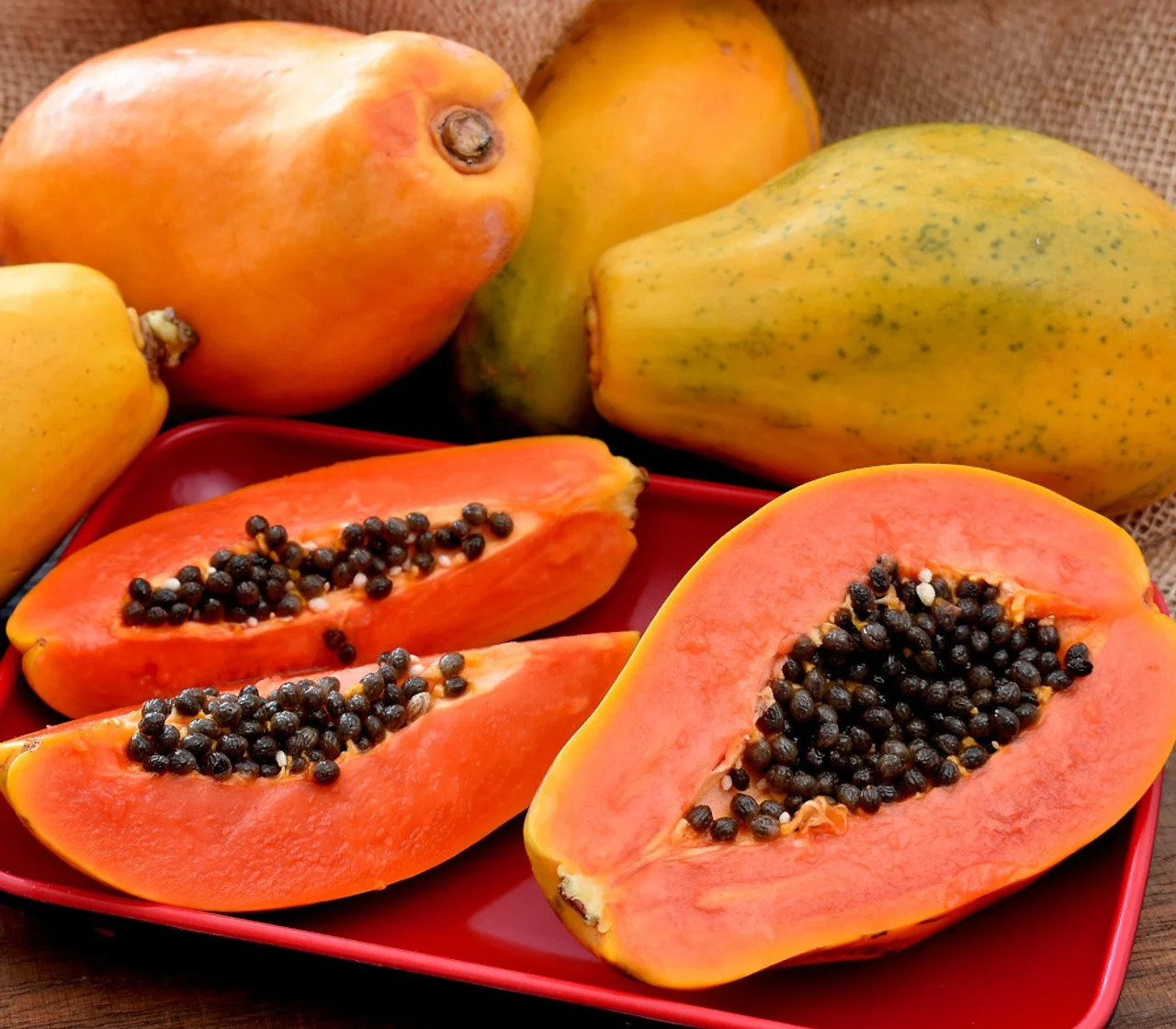
Unripe/green papaya (firm, green skin; used raw, shredded in salads or pickles) contains higher latex and the enzyme papain, which can irritate the GI tract and has been theoretically linked to uterine stimulation. Traditional use and limited lab data drive the caution here.
Ripe papaya (mostly yellow/orange skin, soft, aromatic, orange flesh) has much lower latex activity and is generally considered safe as a food in typical serving sizes.
Bottom line: During pregnancy, avoid unripe/green papaya (especially raw preparations) and stick to ripe fruit.
Food Safety: Handling Papaya the Smart Way
Like other fresh produce, papaya can carry germs if handled poorly (there have been Salmonella outbreaks tied to imported papayas). Pre-cut fruit also carries typical ready-to-eat risks when time/temperature controls slip.
Wash hands, cutting board, knife, and the papaya skin under running water before peeling.
Cut just before eating; refrigerate leftovers promptly (≤40°F / 4°C) and use within 1–2 days.
Be cautious with pre-cut fruit from buffets, street vendors, or items left unrefrigerated.
If you’re buying smoothies or juices with papaya, prefer pasteurized bases and shops with good hygiene practices.
Pregnant women are about 10 times more likely to get listeriosis than other healthy adults. Because immune systems are altered during pregnancy, it is harder for pregnant women to fight off infections. (FDA)
Nutrition Benefits of Ripe Papaya
Ripe papaya can be a helpful part of a balanced pregnancy diet:
Vitamin C – supports iron absorption and immune function
Folate – important for early fetal development
Potassium – fluid balance and healthy blood pressure
Fiber + water – gentle support for regularity and hydration
Tip: Pair papaya with a protein (Greek yogurt, cottage cheese, nuts) for steadier blood sugar.
How to Choose & Prepare Ripe Papaya
Pick for ripeness: Skin mostly yellow/orange, fruit yields slightly to gentle pressure, and smells fruity at the stem.
Ripen at room temp, then refrigerate once ripe.
Peel, seed, and cube just before eating; keep utensils and surfaces clean.
Serve ideas: Papaya + lime, yogurt parfaits, salsa over fully cooked fish or chicken, or blended into a pasteurized smoothie base.
Quick FAQ
Is dried papaya okay?
In moderation, yes—check for added sugars and stick to standard portions.
Can I eat papaya seeds?
Best to avoid in pregnancy. Seeds are bitter, sometimes used medicinally, and not well-studied for safety.
What about green papaya if it’s cooked?
Cooking may reduce enzyme activity, but given traditional cautions and variability in “doneness,” it’s prudent to avoid green papaya during pregnancy.
Conclusion: Enjoy Ripe Papaya, Skip the Green
You don’t have to ban papaya—just be selective. Choose ripe, orange-fleshed papaya and practice good food safety. Avoid unripe/green papaya (especially raw salads) and papain supplements. With these tweaks, you can enjoy papaya’s flavor and nutrients with confidence.
Disclaimer: The content on this website is for informational purposes only and is not intended as a substitute for professional medical advice, diagnosis, or treatment. Always seek the advice of your physician or another qualified health provider with any questions regarding your health, pregnancy, or medical conditions.